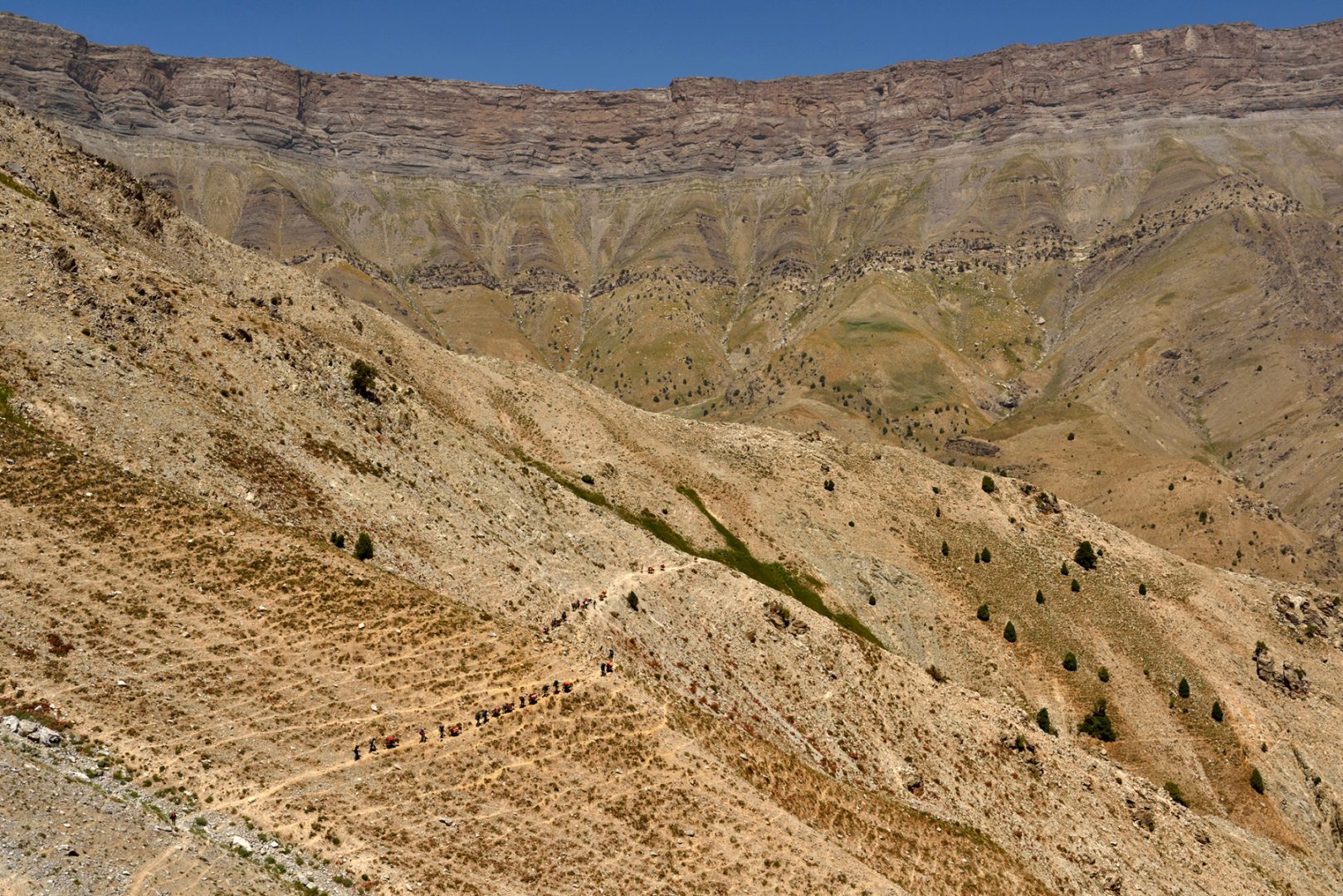
During a two-day hike, the team hired 20 donkeys to help carry all the expedition equipment up the mountain to the base of Baisun Tau cliff. The Russians have identified more than 100 cave openings in the 21-mile-long southeast face of Hodja Gur Gur Ata, but to date, only 22 have been explored. Seven of them lead into the subterranean labyrinth known as Dark Star. Look carefully, and in the top right center of this image you can see one of these entrances. Caving exploration in this isolated corner of Central Asia began in the early 1980s after members of the USSR’s Sverdlosk Speleological Club identified this region’s vast limestone topography from geologic maps. The club had been searching for a place to pursue the Holy Grail of caving—to go deeper into the earth than anyone had gone before—and the Baisun-Tau Mountains, at least on paper, appeared to have all the right ingredients. Mountaineers will never find a peak higher than Everest, but the potential to find new and deeper caves is virtually unlimited. The crux is finding them, and as any caver will tell you: we know more about the surface of Mars than we do about what lies hidden beneath the ground here on earth.