The Yucatán Peninsula is home to at least 8,000 registered cenotes, but countless more may remain hidden as new sinkholes continue to appear. Divers have already mapped about 900 miles of caverns, though that represents only a fraction of the vast underground network.
Nearly eight years ago, Roberto Rojo, along with fellow activists Talismán Cruz and Ximena Chávez, co-founded Cenotes Urbanos (@cenotesurbanos). What began as a grassroots project has grown into a community of nearly 500 members, leading annual expeditions to remove trash, test water quality, and teach workshops on cave ecology and mapping.
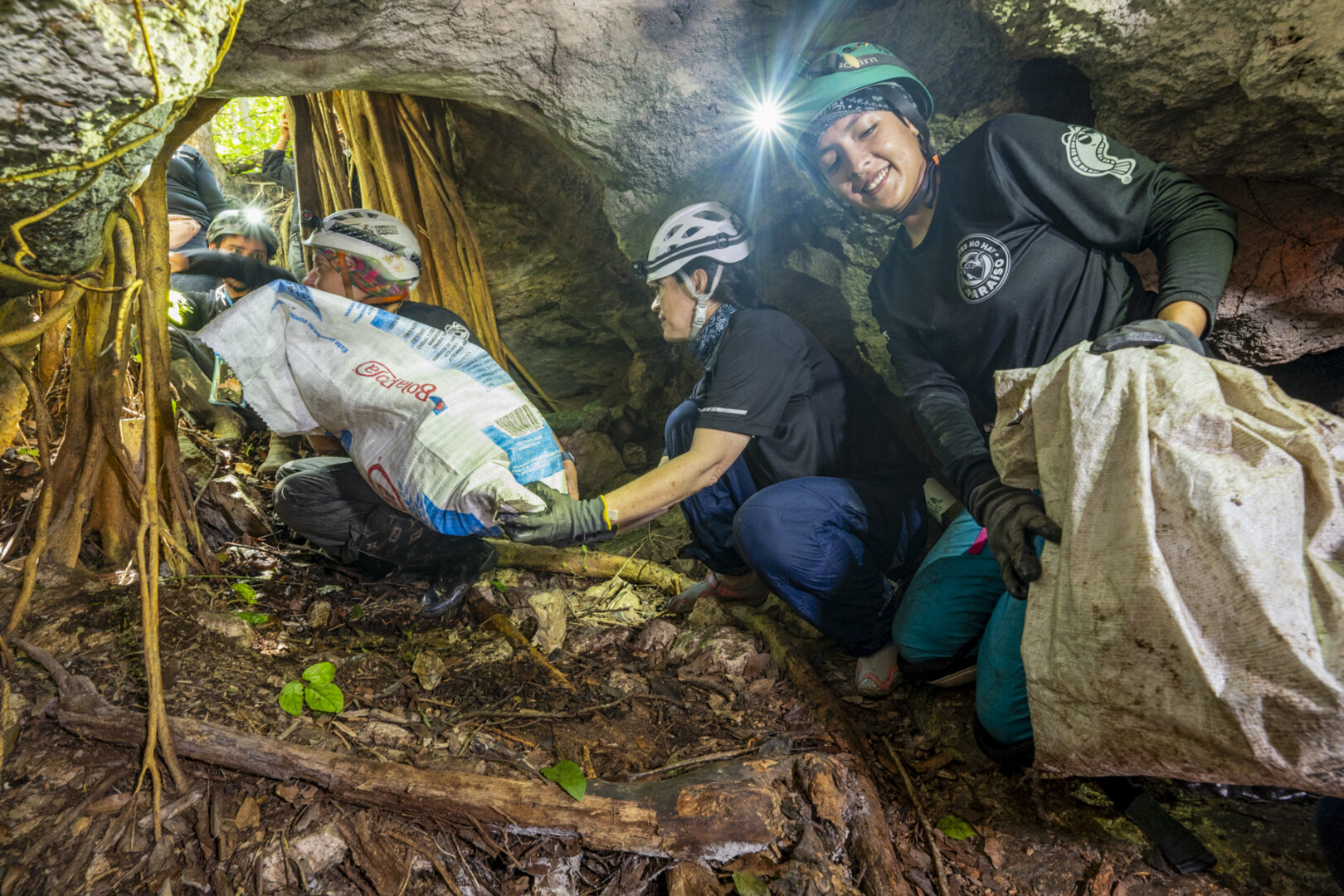
But perhaps their most powerful work happens every single week. Led by the super enthusiastic Alejandra Flores, every Sunday without fail, teams of volunteers gather to clean out a cave. They pull out everything from plastic bottles and food wrappers to tires, rusted metal, and even household appliances; items that have been dumped for decades. What’s shocking is not just the sheer amount of rubbish pulled from the caves, but the dedication and spirit with which the volunteers tackle it. Week after week, they return, transforming once-polluted caves back into thriving ecosystems. These weekly cleanups are more than just waste removal. They are acts of healing and restoration, for the land, the water, and the community. Each cleanup reconnects people with the sacredness of the cenotes and reinforces the urgent need to protect them for generations to come.