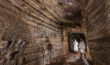
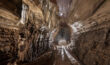
At what initially appears lost in the forest, later transpires to be a different cave. The team had planned to visit one particular cave today, but the with some misscommunication (not surprising) the guides too the the team to a different one. Once inside, the layout appeared to be that of Bangoueguele.
This project aims to generate the first-ever record of seasonal rainfall variability for West and Central Africa from stalagmites in caves. Why stalagmites? Stalagmites preserve a record of past climate in their mineral structure within rings of growth similar to that of trees. The layers are deposited by cave ‘drips’ that fall from the ceiling of the cave onto the stalagmite. Every single drip carries with it a chemical record of its history...from its time in the atmosphere falling as rain, to its time passing through the soil and rock above the cave. The unique chemistry of each drip that is preserved in the stalagmite layers gives us a snapshot into the past climate (temperature & rainfall) and vegetation (reflected in the soil chemistry) above the cave when that layer was deposited.