Robbie Shone Photography
  • Home
  • About Robbie
  • Portfolios
    • Greenland Cave Science
    • Tren Maya: Ecocide
    • Deepest Cave in the World
    • Gabon Cave Science
    • Alpine Ice Caves
    • Martian Analogs
    • Giant Caves of Mulu
    • Untamed Rivers of PNG
    • Veins of the Dragon
    • Pharaohs of Sudan
    • Neanderthal Art
    • Worlds Largest Cave Fish
    • Lechuguilla
    • Dark Star – Into The Deep
    • The Home of Speleology
    • Glacier Cave Exploration
    • Exploring the Lost World
    • Abyss of Cenote
    • Mexico’s Poisonous Cave
  • Prints
  • Hidden Worlds
  • Support
  • Contact
  • Home
  • About Robbie
  • Portfolios
    • Greenland Cave Science
    • Tren Maya: Ecocide
    • Deepest Cave in the World
    • Gabon Cave Science
    • Alpine Ice Caves
    • Martian Analogs
    • Giant Caves of Mulu
    • Untamed Rivers of PNG
    • Veins of the Dragon
    • Pharaohs of Sudan
    • Neanderthal Art
    • Worlds Largest Cave Fish
    • Lechuguilla
    • Dark Star – Into The Deep
    • The Home of Speleology
    • Glacier Cave Exploration
    • Exploring the Lost World
    • Abyss of Cenote
    • Mexico’s Poisonous Cave
  • Prints
  • Hidden Worlds
  • Support
  • Contact

Gabon Cave Science

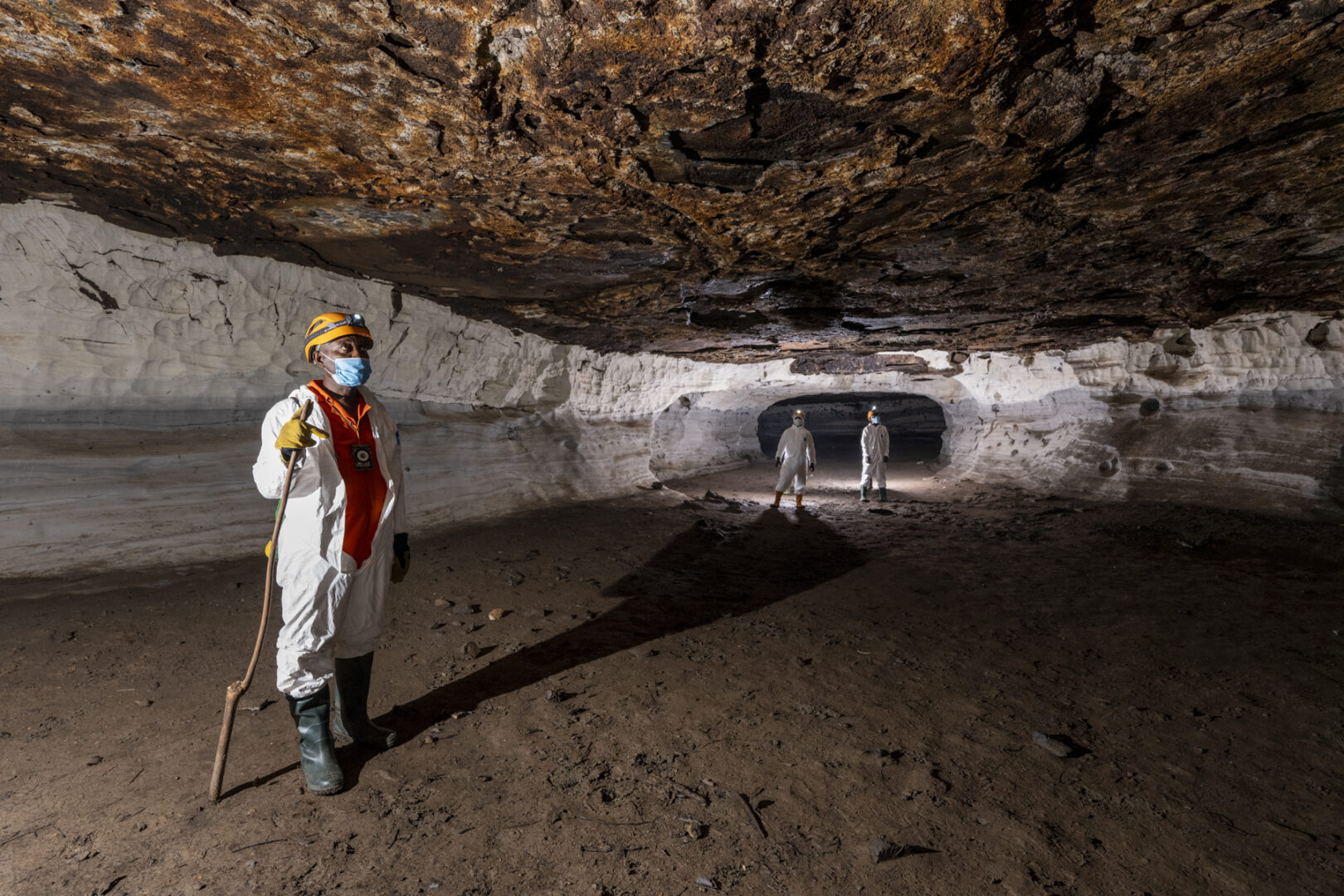
Dr. Ndukauba Egesi, Professor of Geology, University of Port Harcourt, Nigeria poses with his staff in one of the most wide and low-lying tunnel inside the cave. The grey bed and white beds of rock are really evident in this photograph. Two members of the team add scale in the back of the photograph. This cave was full of bats and all the while making these photographs, bats constantly flew in and out of shot. This project aims to generate the first-ever record of seasonal rainfall variability for West and Central Africa from stalagmites in caves. Why stalagmites? Stalagmites preserve a record of past climate in their mineral structure within rings of growth similar to that of trees. The layers are deposited by cave ‘drips’ that fall from the ceiling of the cave onto the stalagmite. Every single drip carries with it a chemical record of its history...from its time in the atmosphere falling as rain, to its time passing through the soil and rock above the cave. The unique chemistry of each drip that is preserved in the stalagmite layers gives us a snapshot into the past climate (temperature & rainfall) and vegetation (reflected in the soil chemistry) above the cave when that layer was deposited.
  • 
  • 
  • 

Copyright © Robbie Shone 2023.